Following data-center development back to its sources.
DataCenterData brings U.S. data-center listings, project records and evidence checks into a searchable website. Readers can explore the map, browse records and see what a source actually supports.
I want tools like this to make complicated information easier to inspect. A location on a map should not silently turn a proposal into an operating facility, and a company announcement should remain identifiable as a company announcement.
My role: I lead DataCenterData’s product development and research workflow, shape how evidence is presented, and review changes. AI tools assist with research, implementation and testing.
One name can describe several different things
A data-center announcement may describe a campus, one building, a later expansion or an operator’s presence at someone else’s facility. Counting every mention as a separate site can give a misleading picture of what exists.
The product keeps those units and source layers distinct. Government registry entries, operator listings and project records carry different kinds of evidence. Several can refer to the same place.
Explore the map without losing the context
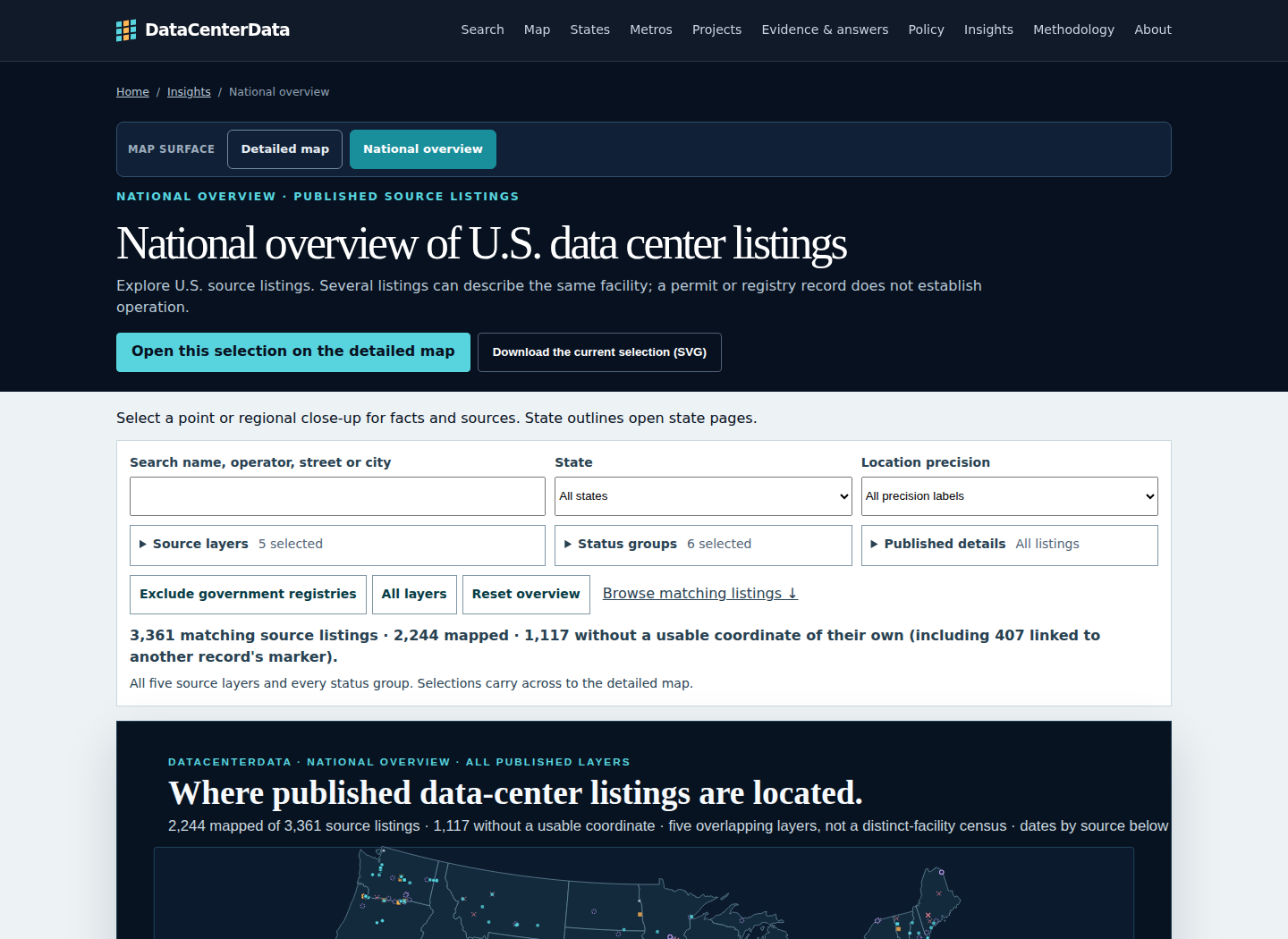
The national overview lets readers explore source listings by location, layer and recorded status. Location precision stays visible, and listings without a usable coordinate remain in the results rather than receiving an invented pin.
Read the record behind the listing
Keep the unit clear
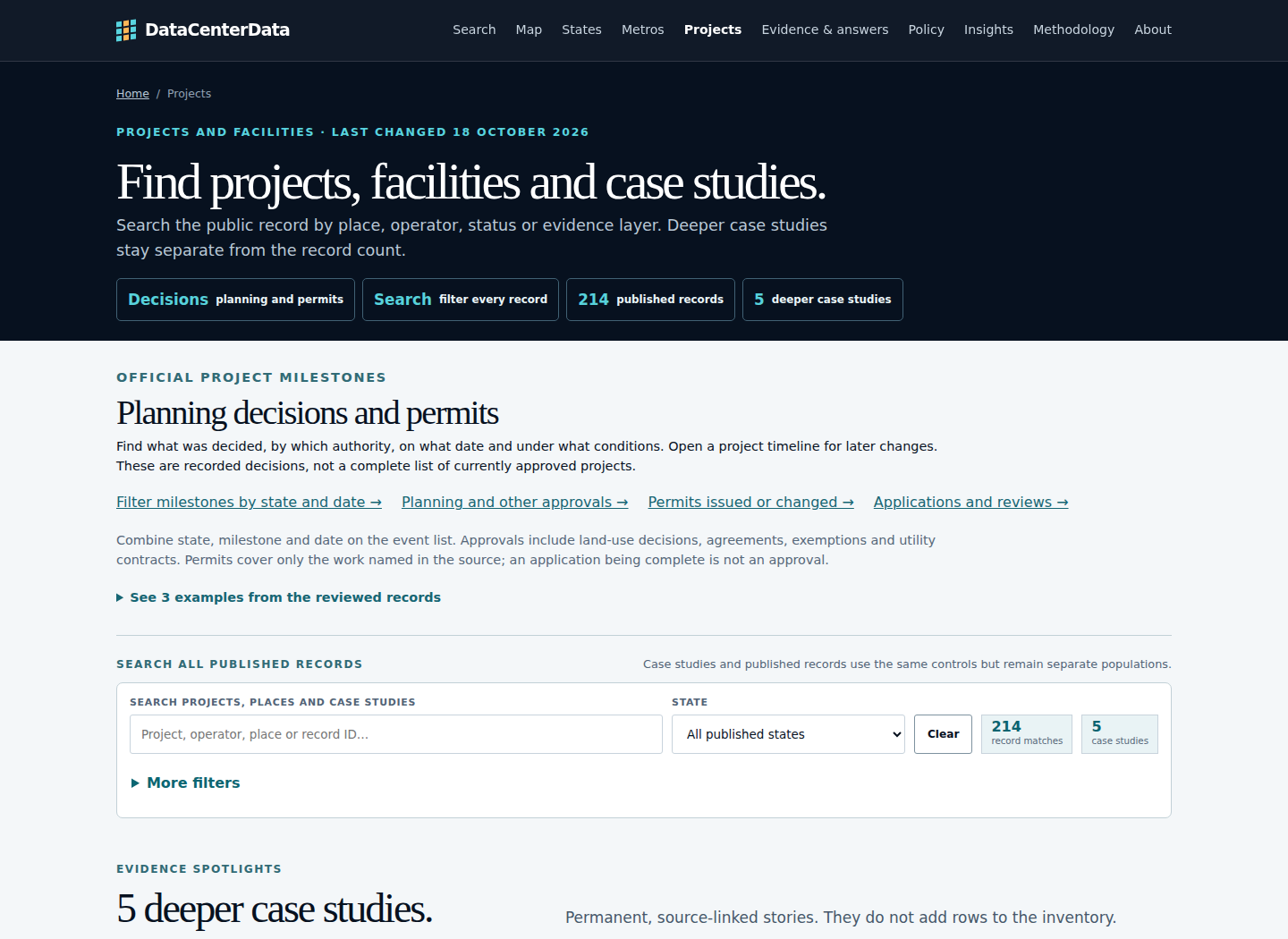
Project and facility records give the evidence a specific subject. A campus total should not become a building figure simply because both share an address.
Keep the claim attached to its source
Evidence checks identify the statement, supporting material, review date and limits. An attributed forecast or company claim is different from a measured outcome.
Free to read, with data access and clear reuse terms
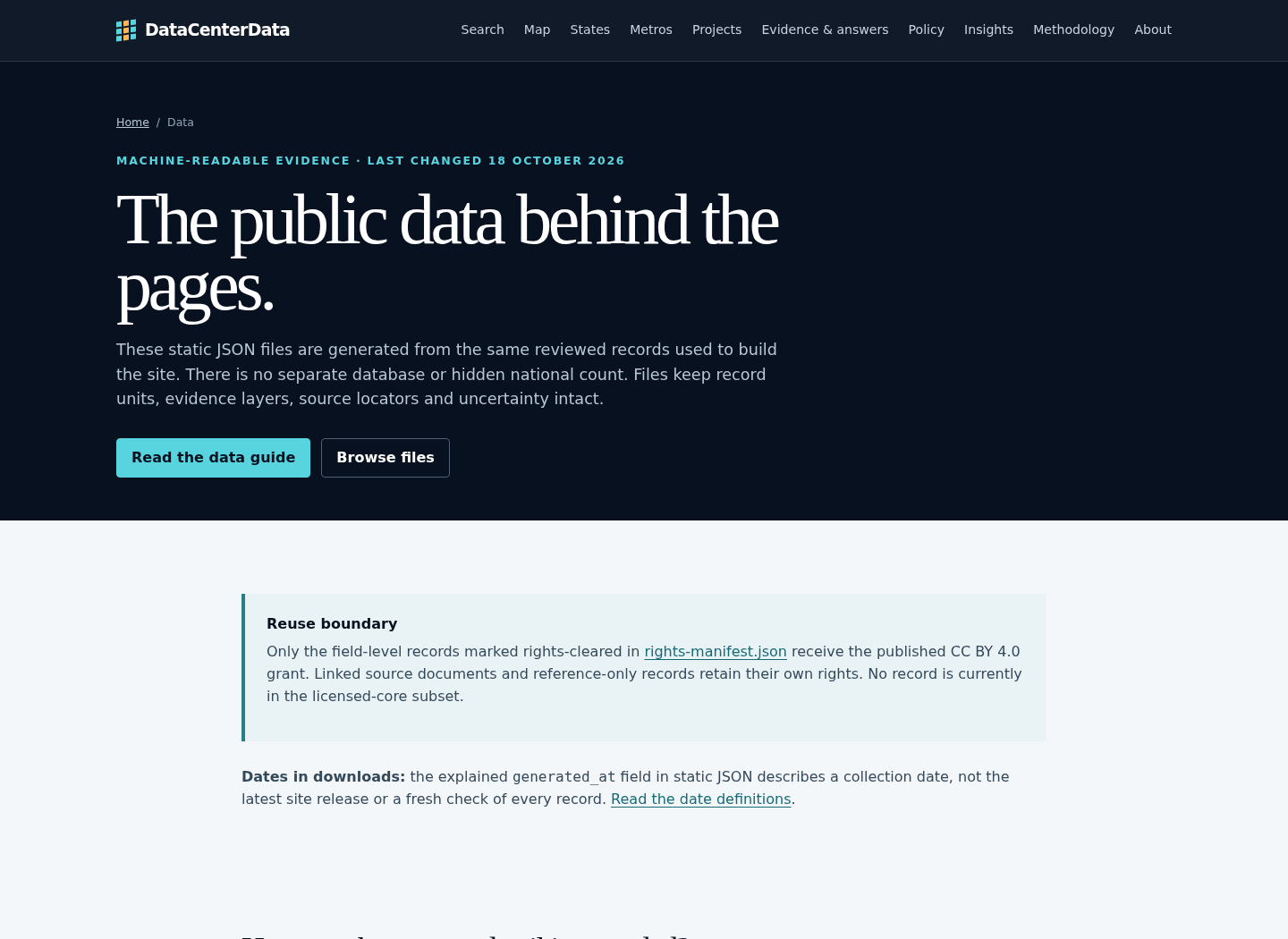
The site is free to browse. Its data page links public machine-readable files so readers can inspect the information behind the pages.
Access and reuse are different. The licensed discovery layer adapted from Compute Atlas has its own CC BY 4.0 attribution. DataCenterData’s other records retain their published field-level rights classifications, and linked source documents keep their own terms. The download guide explains those boundaries.
That is part of the product work too: make useful information accessible without implying that every listing is independently verified or every source is available for redistribution.